




KALARIPAYATTU: THE ULTIMATE WARRIOR’S PATH, A LIVING SYSTEM OF KERALA
The Ultimate Warrior’s Path
Kalaripayattu is often described as one of the oldest martial traditions in the world, but this description barely captures its depth. In its true form, Kalaripayattu is not merely a martial art. It is a complete system of life — a discipline that shapes the body, sharpens the mind, refines the breath, awakens energy, and cultivates character.
Rooted in the cultural and spiritual landscape of Kerala and Tamil Nadu, it stands as a living heritage that has survived centuries of change, conflict, suppression, and revival. Today, it continues to evolve while remaining faithful to the principles that made it a powerful path of transformation.
The origins of Kalaripayattu reach back to the warrior communities of Kerala, particularly the Nairs, who served as protectors of kingdoms, temples, and ritual traditions. For centuries, the kalari — the traditional training ground — was a sacred space where young warriors learned not only combat but also discipline, ethics, medicine, and spiritual practice. During the colonial era, many kalari were destroyed or banned, yet the system endured through families who preserved the knowledge in secret.
In the twentieth century, Kalaripayattu experienced a renaissance, and Kerala once again became the heart of this ancient discipline. Today, kalari schools, therapeutic centres, and research institutes continue to uphold and expand the tradition.
The Three Styles
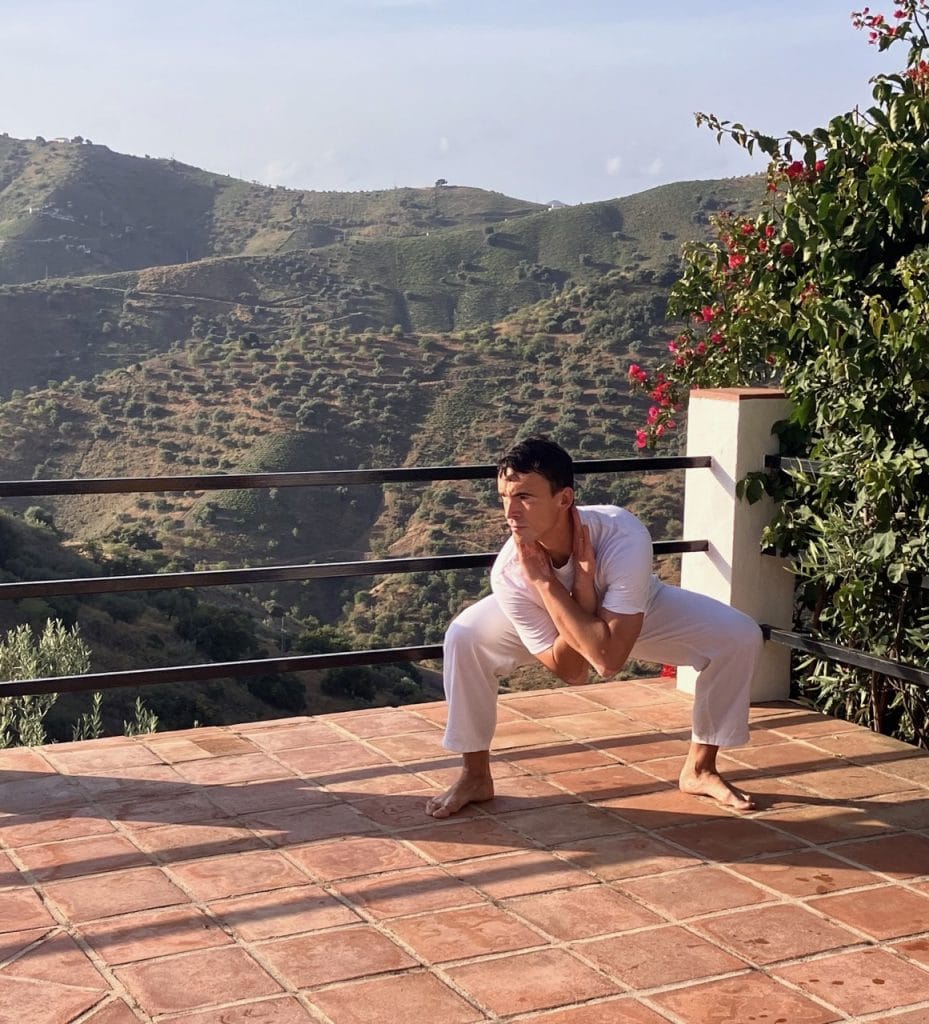
Although Kalaripayattu is one system, it developed into three distinct styles, each shaped by regional culture and lineage.
Vadakkan
Northern Style
The most weapon-oriented and dynamic. Its movements are fluid, spiral, and continuous, reflecting the rhythm of waves and the agility of serpents. Renowned for sophisticated weapon work — the sword and shield, spear, dagger, and the legendary urumi (flexible steel whip-sword). Explored in depth by Phillip Zarrilli, connecting it with breath training and embodied presence.
Thekkan
Southern Style
Focuses strongly on hand-to-hand combat and the science of Marma (vital points). Its techniques are compact, powerful, and precise, emphasising strikes, locks, and grappling. Closely intertwined with Kalari Chikitsa, the traditional medical system using massage, herbal oils, and Marma therapy to heal injuries and restore balance.
Madhya
Central Style
Blends elements of both the Northern and Southern traditions, creating a balanced system that is highly versatile. It is often utilised in performance arts and contemporary movement practices due to its holistic integration of both fluidity and power.
Meipayattu:
The body as a sacred vessel
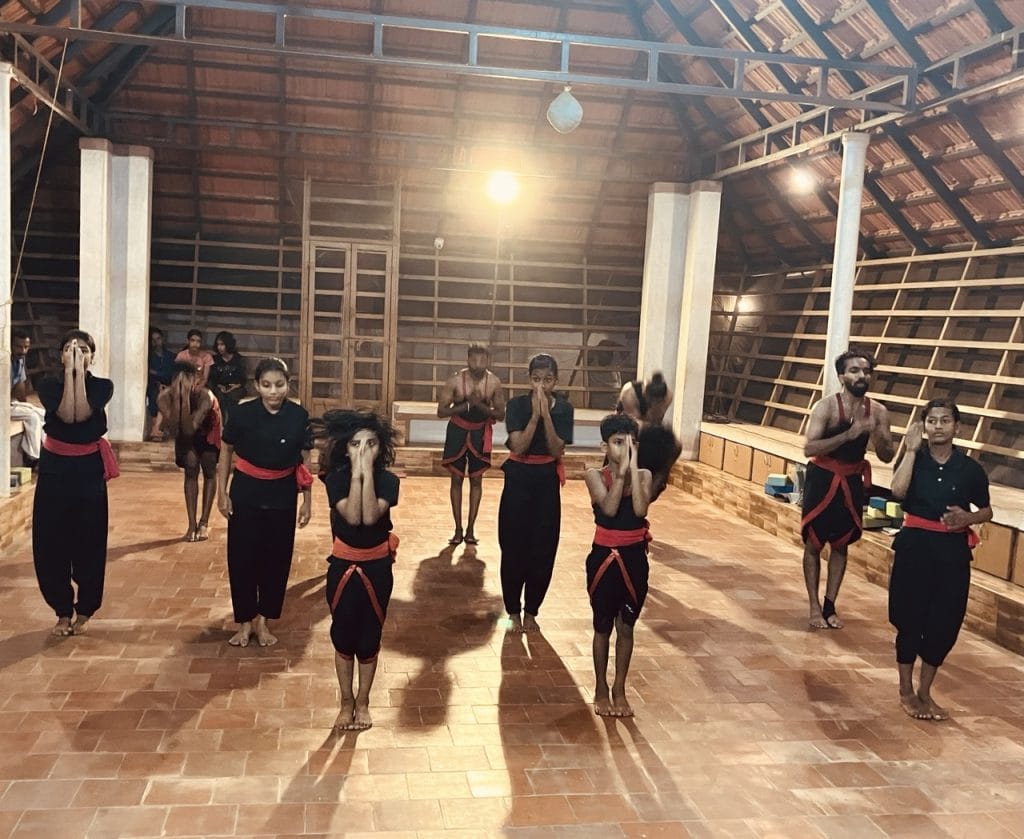
What makes Kalaripayattu unique is that it treats the body as a sacred vessel and movement as a path of transformation. Training begins with meipayattu — sequences that develop strength, flexibility, speed, balance, and coordination.
These movements are synchronized with breath, which becomes the internal engine of the warrior. Over time, the practitioner learns to move with fluidity and precision, cultivating a body that is both powerful and supple. The training is demanding, yet deeply rewarding, forging resilience, discipline, and clarity.
"
"Strength, speed, and flexibility are cultivated not for domination, but for balance. The system teaches that real power arises from harmony: between body and mind, between force and softness, between action and stillness."

Kalari Chikitsa & Marma
Integral to the system is Kalari Chikitsa, the therapeutic branch of Kalaripayattu. This traditional medical practice includes specialized massages performed with the hands, feet, and elbows, as well as mobilization techniques that resemble elements of osteopathy and chiropractic work.
Herbal oils play a central role — warming, nourishing, and strengthening the body. These oils are prepared according to ancient formulas and applied in ways that enhance circulation, support recovery, and maintain the health of joints and muscles. In Kerala, several kalari operate as therapeutic hospitals, where injuries, chronic pain, and physical imbalances are treated using these time-tested methods. Rooted in a deeply developed lineage, CVN Kalari masterfully practices Kalari Chikitsa, bringing holistic health and relief to countless individuals at their centres.
At the heart of both the martial and medical aspects of Kalaripayattu lies the knowledge of Marma. These vital points are intersections of muscles, bones, nerves, vessels, and energetic channels. They are gateways through which prana — life force — flows.
In combat, Marmas can be targeted to disable an opponent; in therapy, they are stimulated to restore vitality and remove energetic blockages. Understanding Marmas requires precision, sensitivity, and responsibility, and is taught only to advanced students who have developed the necessary discipline and awareness.
The Global Lineage
Today, Kalaripayattu is practiced not only in India but also across the world. Schools such as CVN Kalari, founded by C.V. Narayanan Nair, have played a crucial role in preserving and systematizing the northern style, have become renowned for their therapeutic expertise. Many family kalari continue to pass down knowledge through generations, maintaining the intimate lineage-based transmission that has defined the tradition for centuries. Modern practitioners include martial artists, dancers, actors, athletes, and individuals seeking a holistic path of physical and mental development.


The Living Bridge
Kalaripayattu remains, at its core, a warrior’s path — not in the sense of aggression, but in the sense of inner mastery. The true warrior is one who knows how to act with clarity, how to move with awareness, how to breathe with intention, and how to heal both themselves and others. Strength, speed, and flexibility are cultivated not for domination, but for balance. The system teaches that real power arises from harmony: between body and mind, between force and softness, between action and stillness.
In a world filled with tension, distraction, and fragmentation, Kalaripayattu offers a way to return to oneself. Through movement, breath, touch, and tradition, it opens a path toward resilience, presence, and inner alignment. It is a living system — ancient yet modern, physical yet energetic, practical yet profound. For those who walk its path, Kalaripayattu becomes more than training. It becomes a way of life. If you would like to learn more about this fascinating tradition, contact us.